
A newly established Customer Support Team, an emerging product catalog, and a growing network of shared services were reshaping how customers engaged with the Hybrid Cloud platform.
Individual teams understood their responsibilities, but no shared model existed to explain how customer support, service capabilities, operational processes, and governance activities connected across the customer lifecycle.
The operating model was evolving faster than its collective understanding. Knowledge was distributed across teams, contracts, Confluence documentation, Jira workflows, and institutional memory. Creating shared visibility became the foundation for understanding, improving, and stewarding the ecosystem over time.
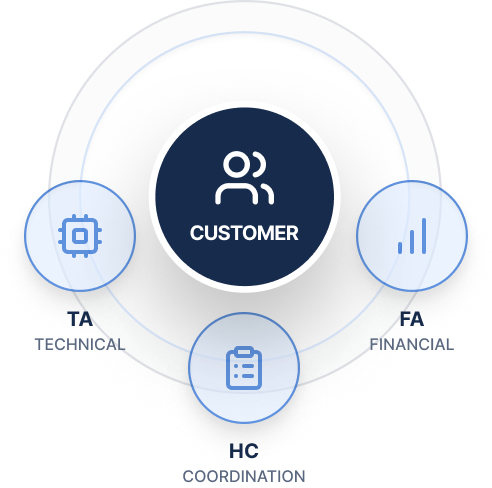
Customer Support Services Operating Model
Customer Support Model

Customer Support Services Operating Model: Establish customer-facing support structure and introduce operational ecosystem
Clearer view of the emerging support model
Shared language for customer-facing responsibilities
Foundation for operational ownership discussions
Starting point for lifecycle and ecosystem discovery
Hosting Coordinator
Technical Advisor
Financial Analyst
Customer engagement responsibilities
Supporting operational functions
Cross-team coordination needs
Blueprint Expansion Framework: Expand visibility beyond onboarding into services, governance, tools, roles, and dependencies
Visibility into operational relationships
Common structure for future discovery
Reduced fragmentation across initiatives
Foundation for ecosystem-level understanding
Customer lifecycle activities
Operational roles
Service capabilities
Governance interactions
Supporting tools
Operational dependencies
Artifact
Operational Roles & Ownership Landscape: Understand responsibilities, workflows, collaboration patterns, and ownership boundaries
CRM Role Profiles: Document operational roles and responsibilities
Clearer ownership boundaries
Improved understanding of role responsibilities
Visibility into workflow participation
Foundation for CRM design decisions
Hosting Coordinator
Technical Advisor
Financial Analyst
FinOps Engineer
Data Auditor
Super Admin
Technical Writer
Oversight & Management
General Consumer
QA Tester
Operational Needs & Capability Mapping: Identify recurring operational needs independent of individual roles
Shared understanding of operational requirements
Ecosystem-level capability visibility
Better alignment between platform and operations
Reduced role-specific solutioning
Information visibility
Workflow coordination
Decision support
Reporting
Collaboration
Customer context
Role-Based CRM Framework: Align permissions, dashboards, workflows, and responsibilities to operational roles
Improved alignment between responsibilities and access
More tailored operational experiences
Clearer workflow ownership
Foundation for scalable governance
CRUD permissions
Dashboard visibility
Workflow ownership
Decision support
Role-based experiences
Artifact
Initial ONBI Lifecycle Blueprint: Capture onboarding activities, responsibilities, governance, and dependencies
Unified ONBI Blueprint: Converge onboarding activities into a single operational model
Unified onboarding view
Reduced process fragmentation
Improved cross-functional collaboration
Greater lifecycle visibility
Validated ONBI Journey: Validate lifecycle model with operational stakeholders
Unified onboarding view
Reduced process fragmentation
Improved cross-functional collaboration
Greater lifecycle visibility
Onboarding stages
Operational ownership
Process sequencing
Customer interactions
Supporting responsibilities
Initial O&M Lifecycle Model: Capture recurring post-go-live operational rhythms
Visibility into post-launch operations
Recognition of operational rhythms
Foundation for O&M analysis
Expanded lifecycle perspective
Weekly Operational Analysis
Monthly Customer Engagement
Quarterly Optimization
Annual Governance & Funding
End-of-Service / Decommissioning
Integrated ONBI + O&M Blueprint: Create end-to-end lifecycle model
End-to-end lifecycle visibility
Shared operational model
Stronger lifecycle planning
Foundation for stewardship activities
Initial Shared Services Ecosystem Map: Visualize services, teams, and capabilities contributing to customer outcomes
Shared Services Dependency Model: Understand lifecycle dependencies across operational partners
Clearer dependency visibility
Stronger cross-team coordination
Better operational planning
Reduced ownership ambiguity
Product Engineering
Operations
Security
Cost Management
Platform Administration
Governance Functions
Observability
Funding
Cost Management Service Model: Understand optimization as a lifecycle capability
Earlier optimization planning
Greater cost visibility
Alignment between onboarding and operations
Lifecycle-oriented decision making
Onboarding
Operations
Optimization
Governance
Governance Interaction Model: Reveal governance participation throughout the lifecycle
Governance visibility
Improved compliance awareness
Better lifecycle planning
Stronger operational alignment
Approvals
Security activities
Compliance checkpoints
Annual funding cycles
Ecosystem-Wide Blueprint: Connect customer support, governance, lifecycle, shared services, and stewardship into a single model
Ecosystem-wide visibility
Shared understanding of customer outcomes
Recognition of shared services as active participants
Foundation for service stewardship
Customer Support
Onboarding
Operations
Shared Services
Governance
Optimization
Lifecycle Stewardship
Operational Findings Repository: Capture recurring friction points, findings, and recommendations
ONBI Findings Analysis: Analyze onboarding challenges and readiness gaps
Readiness visibility
Better onboarding planning
Earlier risk identification
Stronger customer preparedness
Readiness
Customer education
Service awareness
Governance alignment
Operational handoffs
Customer responsibilities
O&M Analysis Framework: Analyze recurring operational support activities
Visibility into operational rhythms
Improved stewardship planning
Stronger customer engagement strategy
Recognition of lifecycle-based support
Customer engagement rhythms
Optimization activities
Operational planning
Incident response
Governance participation
Lifecycle stewardship
Customer Readiness Framework: Evaluate customer preparedness across lifecycle stages
Shared readiness model
Earlier intervention opportunities
Improved customer outcomes
Foundation for readiness governance
Cloud Optimization Workshop & Action Planning: Transform findings into improvement opportunities
Service Playbook / Findings Portfolio / Enhancement Roadmap: Organize improvements into a structured portfolio
Prioritized enhancement portfolio
Structured improvement pathways
Better strategic decision making
Continuous improvement planning
Readiness
Governance
Feedback Collection
Observability
Infrastructure planning
Operational rhythms
Incident response
Optimization
Service Playbook MVP: Centralize service enhancements, operational frictions, and future opportunities
Centralized improvement portfolio
Structured enhancement management
Operational memory
Foundation for stewardship
Service Evolution Maturity Model: Define long-term maturity progression
Shared understanding of maturity
Long-term planning framework
Improved prioritization
Visibility into future capabilities
Stage-Based Readiness Framework: Treat readiness as a lifecycle capability
Lifecycle readiness planning
Improved customer preparedness
Earlier issue detection
Stronger onboarding outcomes
Production Readiness Checklist ↓
Lifecycle Readiness ↓
Customer Prepardness ↓
Service Capability
Process & Task Guidance Architecture: Align guidance to lifecycle, process, task, and operational context
Lifecycle-aligned knowledge architecture
Improved guidance discoverability
Better operational support
Foundation for contextual enablement
Lifecycle alignment
Process-level guidance
Task-level guidance
Operational context
Future CRM enablement
CRM Guidance Vision: Transform CRM into operational enablement platform
Lifecycle-aware workflows
Contextual guidance delivery
Integrated knowledge repository
Process-based navigation
Operational decision support
Customer
Lifecycle Stage
Process
Task
Guidance
Readiness
Operational Context
Historical Service Repository: Preserve findings, decisions, enhancements, and evolution history
Structured governance
Historical traceability
Service evolution visibility
Continuous improvement capability
Service Stewardship Framework: Connect all stewardship capabilities into a single system
Structured governance
Lifecycle readiness planning
Contextual guidance foundations
Historical service intelligence
Continuous improvement capability
Lifecycle visibility
Shared service visibility
Dependency visibility
Improvement pathways
Readiness frameworks
Guidance architecture
Historical service intelligence
Helping organizations understand, steward, and evolve complex service ecosystems.

